Seawall vs Bulkhead: Which Is Right for Your Property?

Understand the differences and make the best choice for your Michigan waterfront

2
Solutions
Site-
Specific
Expert
Assessment
Free
Consultation

The Critical Choice: Seawall vs Bulkhead

One of the most common questions we hear is simple but important: should I build a seawall or a bulkhead? While these terms are sometimes used interchangeably, they serve different purposes and perform under different conditions. Choosing the wrong solution leads to expensive repairs, property damage, or complete failure. Understanding the differences helps you make the right choice for your specific site.

The answer depends on your location, soil conditions, water exposure, and what you're trying to protect. Let us walk you through the characteristics of each option and the factors that determine which works best for your property.

Seawalls vs Bulkheads: Side-by-Side Comparison

Feature Seawall Bulkhead
Primary Purpose Wave and erosion protection Soil retention
Wave Resistance High, designed for active water Moderate, some wave protection
Soil Retention Yes, secondary function Primary function
Construction Angle Steeper, 50-70 degrees or vertical Steeper to vertical, varies with soil
Reinforcement Heavy, designed for wave load Standard, soil pressure focused
Best For Open water, lakes, exposed shorelines Protected coves, backbays, calm water
Material Options Stone, Redi-Rock, vinyl, steel, concrete Wood, vinyl, steel, composite
Cost Range Varies by material, 50+ per linear foot Varies by material, 40+ per linear foot
Maintenance Low to moderate, material dependent Moderate to high, material dependent

What Is a Seawall?

A seawall is a marine structure designed to protect shorelines from wave action, erosion, and water level fluctuations. Seawalls absorb and deflect wave energy rather than allowing it to erode the bank behind them. They also retain the soil and prevent erosion from water movement and storms.

Seawalls are built at steeper angles and with stronger structural reinforcement because they must withstand dynamic wave loads and pressure changes. The face of the seawall absorbs direct wave impact, redirecting that energy away from your property. Proper design includes provisions for water drainage to prevent pressure buildup behind the wall.

Best Suited For

  • Properties on open water (Lake Michigan, major rivers)
  • Areas with significant wave action and water level changes
  • Locations with winter ice pressure and freeze-thaw cycles
  • Commercial or high-traffic waterfront areas
  • Properties where maximum shoreline protection is essential

What Is a Bulkhead?

A bulkhead is a retaining structure designed primarily to hold back soil. While bulkheads do provide some protection from water erosion, their main function is to prevent soil movement and maintain a vertical or near-vertical bank. They're common in protected harbors, coves, and areas where water movement is gentle.

Bulkheads are often simpler in construction than seawalls because they handle soil pressure rather than dynamic wave loads. However, they still require proper foundation work, drainage, and anchoring. A bulkhead in an exposed location can fail because it lacks the reinforcement needed to handle wave energy.

Best Suited For

  • Protected harbors, backbays, and internal waterways
  • Areas with minimal wave action and calm water
  • Rivers and channels with controlled flow
  • Residential properties in sheltered locations
  • Projects where the primary concern is soil retention, not wave energy
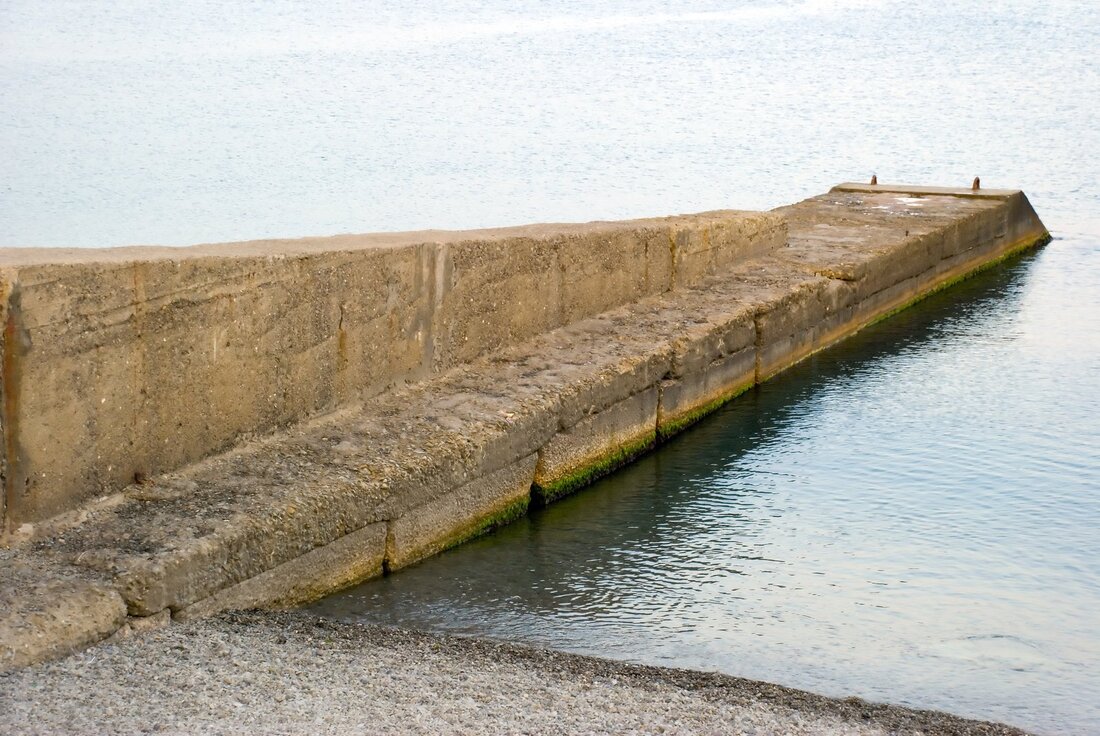
Comparison of seawall and bulkhead construction

Site Factors That Determine Your Choice

The right solution for your property depends on several site-specific conditions. This is why we conduct a thorough assessment before recommending any approach. Here are the key factors we evaluate:

Water Exposure

How much wave action does your property receive? Open water, particularly Lake Michigan, creates significant wave energy. Protected coves and harbors experience minimal waves. Higher water exposure demands seawall construction.

Soil Composition

Your soil type affects design. Clay and silt require different solutions than sandy soils. We evaluate bearing capacity, stability, and how water moves through your soil. This determines drainage and foundation requirements.

Bank Height and Topography

How high is the bank behind your shoreline? What's the land use and improvement value you're protecting? Steeper banks with higher clay content may require seawall design even in protected water.

Water Table and Drainage

Groundwater level affects soil stability and pressure on your structure. We assess seasonal fluctuations, ice action, and freeze-thaw cycles. Proper drainage prevents catastrophic failure.

Ice Pressure and Winter Conditions

Michigan's winter creates unique challenges. Ice expansion and freeze-thaw cycles apply tremendous force to shoreline structures. We design for these seasonal stresses.

Environmental and Permit Requirements

Different structures require different permits and environmental assessments. We understand EGLE requirements and can advise which structure type faces fewer regulatory hurdles for your location.

Frequently Asked Questions

A bulkhead can work on open water only if water exposure is genuinely minimal. In Lake Michigan or areas with significant wave action, a bulkhead typically fails within 5-15 years because it lacks the reinforcement to handle wave loads. The structural design differs fundamentally. If you're on open water, you need seawall-level engineering regardless of what you call the structure.

Protected harbors and backbays with calm water are ideal for bulkhead construction. A bulkhead handles soil retention effectively in these conditions and costs less than a full seawall. The key is honest assessment of your actual water exposure. We evaluate your specific location and wave conditions to confirm this is appropriate for your site.

We start with a site visit to evaluate water exposure, soil conditions, bank height, and topography. We assess wave action during different seasons and water level fluctuations. We review soil boring data or conduct testing if needed. We understand your budget and timeline. Then we recommend the structure type that provides the best protection for your specific conditions and investment level.

Yes, but it's more expensive than building correctly the first time. If a bulkhead fails or you determine you need seawall protection, you'll have removal, remediation, and new construction costs. It's much better to build the right solution initially. This is why our assessment is critical before you start any construction.

Get Expert Assessment for Your Property

We provide free site evaluation and recommendation. Let us assess your conditions and recommend whether a seawall or bulkhead is right for you.

Expert Seawall and Bulkhead Design in Michigan

Site-specific assessment to determine the right solution for your shoreline